


PyData Pittsburgh is excited to host our first event of 2026: Characterizing the Transient Universe with the Pitt-Google Alert Broker. Join us Wednesday, February 25, as Christopher Hernández, Ph.D. candidate at the University of Pittsburgh, shares more about his research using machine learning in astronomy.
We have an exciting venue for this event—the Allegheny Observatory has graciously agreed to not only host the talk but also offer a free private tour exclusively for the PyData Pittsburgh group after the presentation! Don’t miss this opportunity to learn about cutting-edge AI applications in astronomy while exploring one of Pittsburgh’s most fascinating scientific landmarks.
Note: Attendance for this event is limited. Please RSVP only if you are committed to attending. Thank you.
Schedule
February 25th
7pm, Doors Open
7:30pm, Talk
8:30pm, Observatory Tour
About the talk:
We live in a dynamic universe. For the foreseeable decade and beyond, our field’s understanding of the physical mechanisms driving evolutionary processes across local and cosmological scales will flourish thanks to the incredibly rich datasets produced by wide-field astronomical surveys, such as Vera C. Rubin Observatory’s Legacy Survey of Space & Time (LSST). Furthermore, astronomical alerts—packets of data containing world-public information about the sources detected by a survey—produced by LSST will enable the ability to conduct real-time, time-domain studies of the transient universe at a scale never seen before in the field of astronomy.
In this talk, I will introduce the Pitt-Google Alert Broker: an astronomical community alert broker designed to enable broad public access to, and scientific analysis of, alert streams from various surveys. In particular, I will highlight the increasingly diverse suite of machine learning models and cloud resources employed by Pitt-Google, with the intention of mitigating the challenges the field of astronomy now faces in data access, processing, transport, and storage.
About the observatory:
The Allegheny Observatory is one of the major historic astronomical research institutions of the world. A short presentation about the institution will be shown followed by a walking tour of the building finally ending up at the 13” Fitz-Clark refractor. More information about getting to the observatory can be found on our Meetup Event page.
About the Speaker:
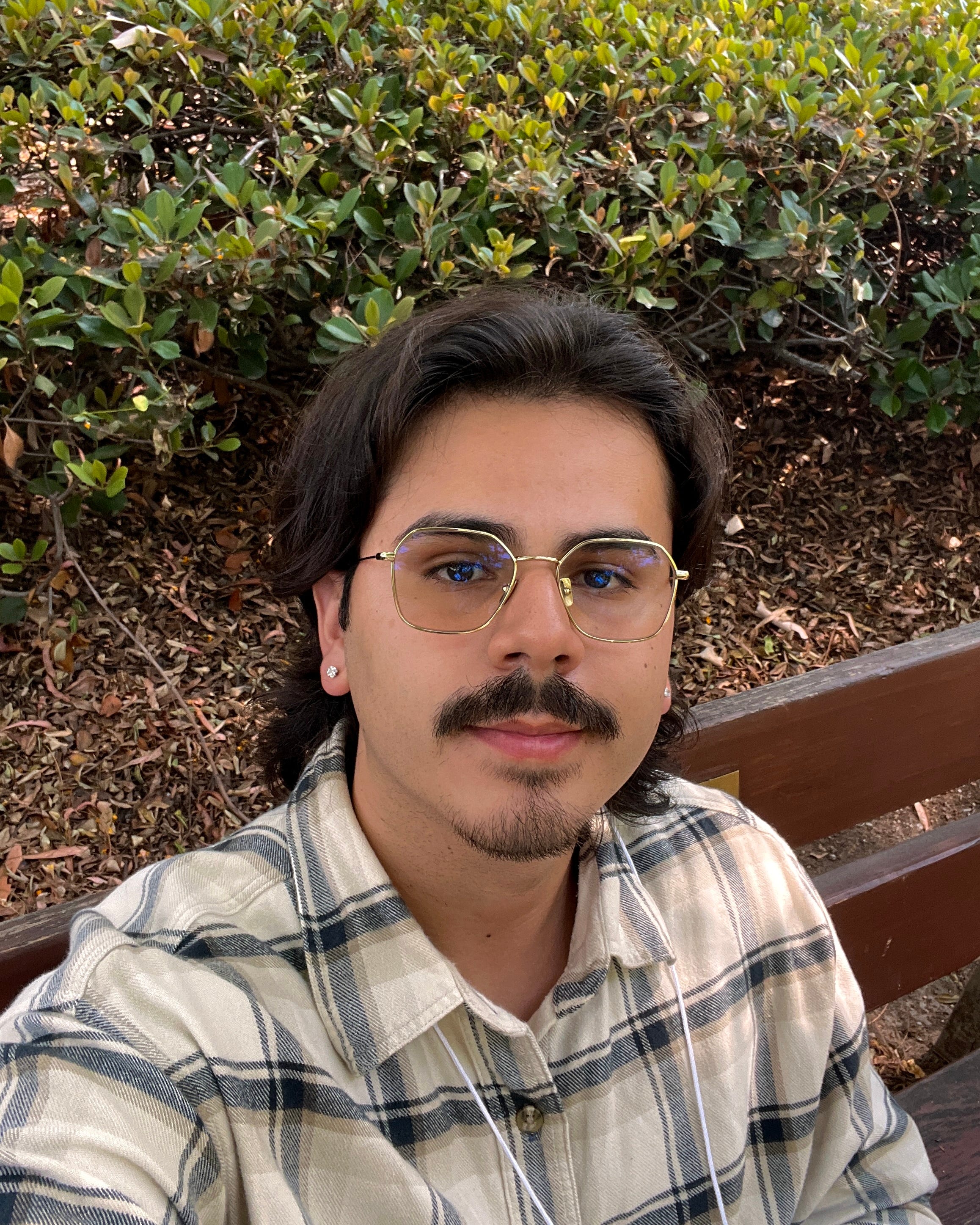
Christopher Hernández is a physics Ph.D. candidate at the University of Pittsburgh. He obtained his bachelor’s degree in astrophysics from the University of California, Los Angeles (UCLA) and his master’s degree in physics from the University of Pittsburgh. Christopher is experienced in developing software pipelines for the analysis of astronomical data in real time, and his research currently focuses on analyzing how the systematic differences between ML algorithms—particularly in the training, hyperparameter optimization, and prediction processes that each algorithm employs—affect the resulting decision boundaries of various astrophysical classes.